Rudy Giuliani 🇺🇸
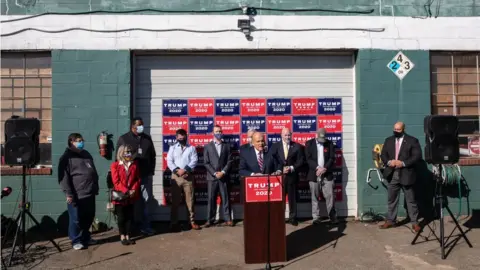
This post reviews the descent of Rudy Giuliani — once a prominent New York prosecutor and mayor, later a high-profile lawyer — into professional disgrace. After advancing false election-fraud claims following the 2020 U.S. presidential election, he was suspended and ultimately disbarred as a lawyer in New York and Washington, D.C. The post outlines the key facts, regulatory consequences, and current status.
The Rogue
Rudy Giuliani was admitted to the New York bar in 1969. (nycourts.gov) He served in public office — notably as U.S. Attorney in Manhattan and as Mayor of New York City. Later, he provided legal representation to a former U.S. president, including post-election litigation and public advocacy. (Wikipedia)
What Happened
After the 2020 U.S. presidential election, Giuliani became a leading proponent of claims that widespread voter fraud had cost his client the presidency. (Wikipedia) A court found “uncontroverted evidence” that he had made “demonstrably false and misleading statements to courts, lawmakers and the public at large.” For this reason, in June 2021, his licence to practise in New York was suspended. (The Guardian) Further disciplinary proceedings followed. On 2 July 2024, a New York appeals court formally disbarred him, concluding that his conduct “undermined the integrity of the electoral process” and was incompatible with the duties of a lawyer. (Reuters) In September 2024, a court in Washington, D.C. reciprocally disbarred him for the same misconduct, noting he had failed to respond to show-cause proceedings. (The Guardian)
Where Are They Now
As of summer 2025, Giuliani is disbarred in New York and Washington, D.C. (Reuters) He faces ongoing legal challenges: criminal indictments in Georgia and Arizona for alleged election-subversion activities remain pending. (Wikipedia) He also remains subject to civil claims related to defamation and other litigation arising from the 2020 election disputes. (Wikipedia)
Reflection
Giuliani’s case illustrates how even a storied legal and political career offers no immunity from professional discipline when factual accuracy and professional ethics are abandoned. As a lawyer, statements carried under oath and in public filings must rest on verifiable facts. Repeated dissemination of false claims — especially those affecting public confidence in democratic processes — has demonstrable consequences.
This instance reinforces a basic precept: legal legitimacy depends not merely on credentials or past service, but on ongoing adherence to truth and duty to the court and public.